

Pruning Machines: The Essential Guide to Choosing the Right Equipment
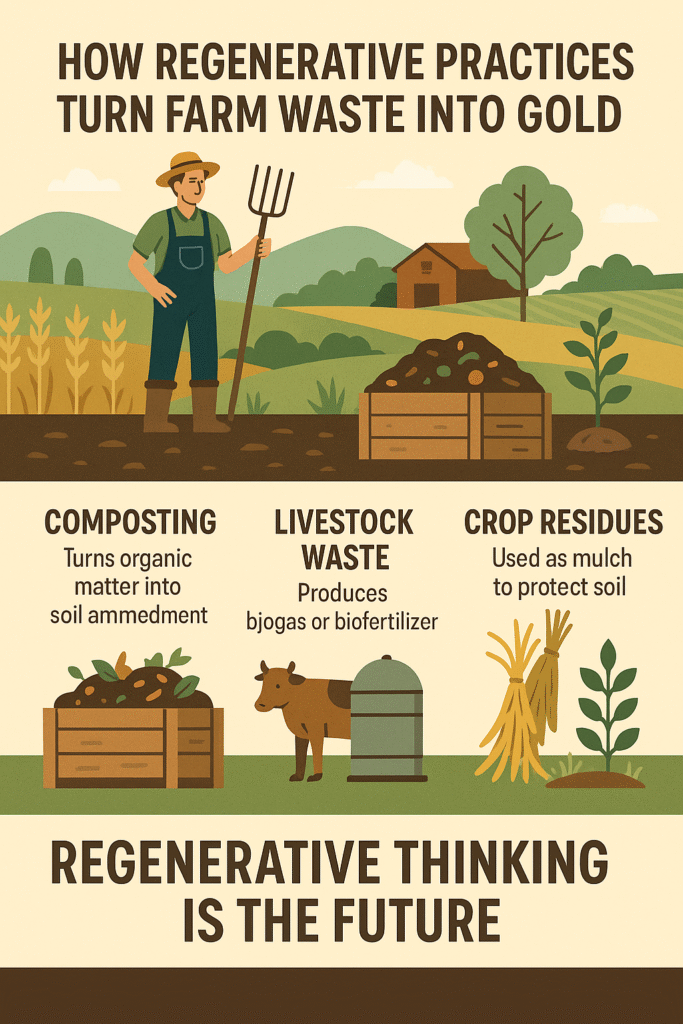
Regenerative practices are reshaping the way we think about farming, turning traditional agricultural waste into powerful tools for soil restoration, clean energy, and local innovation. Unlike conventional methods that exhaust natural resources and create harmful byproducts, regenerative agriculture works in harmony with nature to build healthier ecosystems. By viewing crop residues, animal manure, and food scraps as valuable assets rather than waste, regenerative practices create closed-loop systems that reduce emissions, improve soil fertility, and open new income streams for farmers. This shift isn’t just about sustainability—it’s about transforming the future of food production.
Let me tell you something that changed the way I think about farming: waste isn’t waste—it’s opportunity. In modern agriculture, we’re taught to maximize production at any cost. We pour on the chemicals, burn fossil fuels, and push the land harder and harder. And sure, we get more yield in the short term. But what about the long-term health of the soil, the water, and our communities?
That’s where regenerative agriculture comes in. It’s not just a buzzword—it’s a way to transform farm byproducts into valuable tools that work for the land instead of against it.
The Problem with Modern Agricultural Waste
If you walk through a typical farm, you’ll probably see piles of crop residue, animal waste, or even food scraps just rotting—or worse—burning. These “wastes” release methane, contribute to pollution and cost money to dispose of. In the past, I saw these as problems to get rid of.
But regenerative thinking flips that.
Managing Farm Waste the Regenerative Way
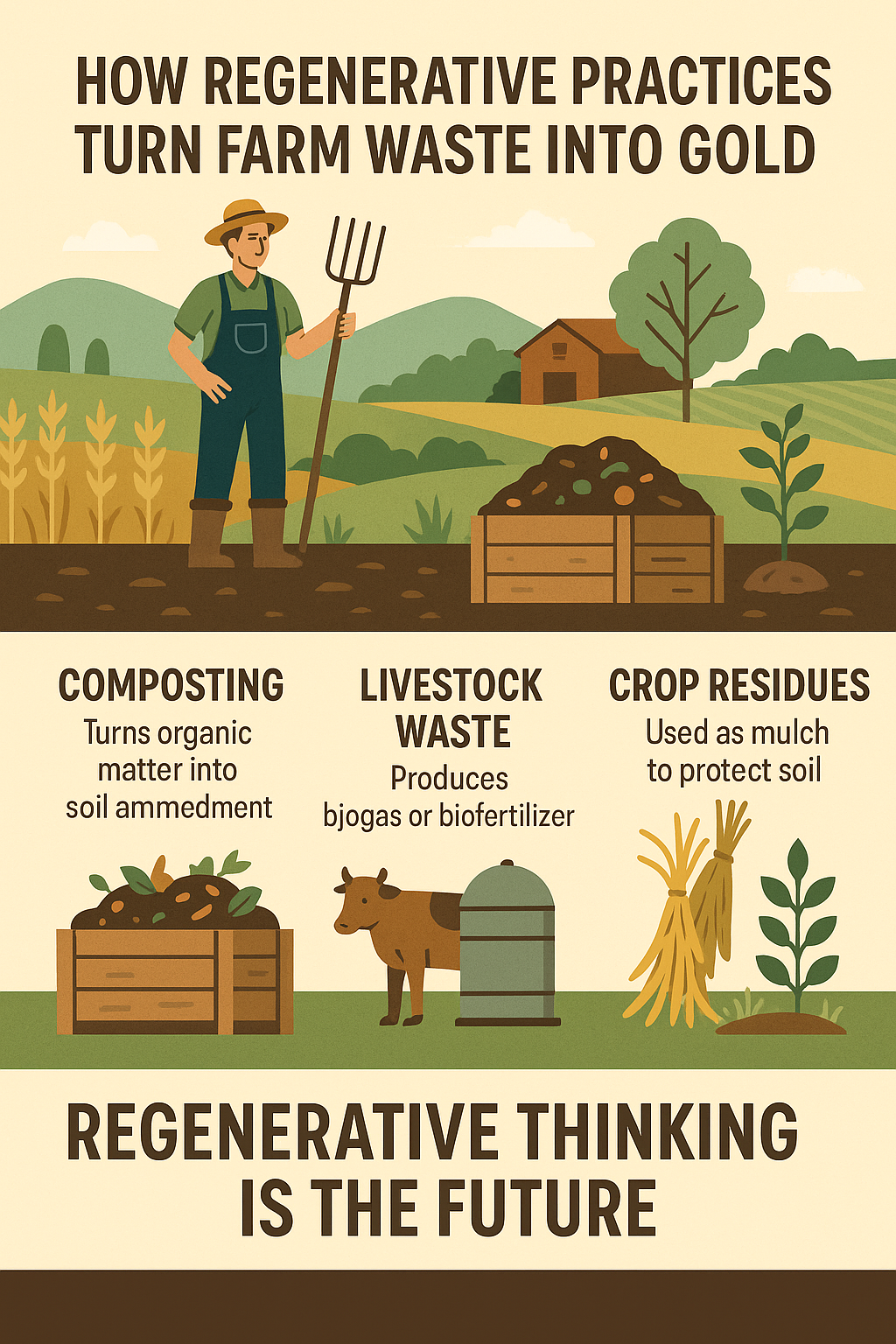
Here’s what we do now. We compost that organic matter. Instead of throwing away crop leftovers or manure, we turn it into rich, living compost. This boosts the microbes in our soil, helps retain moisture, and reduces our need for synthetic fertilizers. You can even learn more about composting here.
And let’s talk about livestock manure. Rather than letting it pollute our waterways, we use it to produce biogas or convert it into biofertilizer. That’s clean energy and better crops—two wins with one solution.
We also use husks, stalks, and trimmings as mulch. This stops erosion, locks in soil moisture, and keeps weeds at bay—without needing herbicides.
Even in agroforestry, those fallen leaves and branches become powerful soil-builders as they decompose naturally.
How Regenerative Practices Spark Local Innovation
I used to think that “sustainability” meant sacrificing profitability. Not anymore. Regenerative agriculture actually opens doors to new business models. Think about it: compost, mushroom substrates, even biochar for carbon capture—these are all sellable products. And they all start as waste.
I’ve seen farmers team up to create small co-ops that turn byproducts into value-added products they sell at local markets. That’s how we build resilient, local food economies.
Want to explore more on the concept of a circular economy in agriculture? Check out this guide from the Ellen MacArthur Foundation.
Thinking Regenerative Practices Is the Future
When we stop seeing farm byproducts as garbage and start seeing them as resources, we begin to regenerate our farms, our soil, and our communities. We cut waste, cut costs, and create new income. All while protecting the planet.
So, is regenerative agriculture a magic bullet? No. It takes work. But it’s work that pays back in health, sustainability, and long-term resilience.
Ready to Regenerate?
Join our Ecolonomic Action Team (EAT) Community to discover how real farmers, homesteaders, and landowners are using regenerative practices to build thriving businesses and healthier ecosystems.
Click here to start your regenerative journey
References & Further Reading:
- Integrating Regenerative Agriculture with Traditional Farming Practices
- How Regenerative Agriculture Contributes to Water Conservation and Management
- Composting at Home – EPA
- What is Biochar? – IBI
- Circular Economy for Food – Ellen MacArthur Foundation
- Regenerative Agriculture – Rodale Institute

The post How Regenerative Practices Turn Farm Waste into Gold first appeared on Institute of Ecolonomics.
Related Articles
