

Why Edible Insect Polyculture Matters for Circular Agriculture
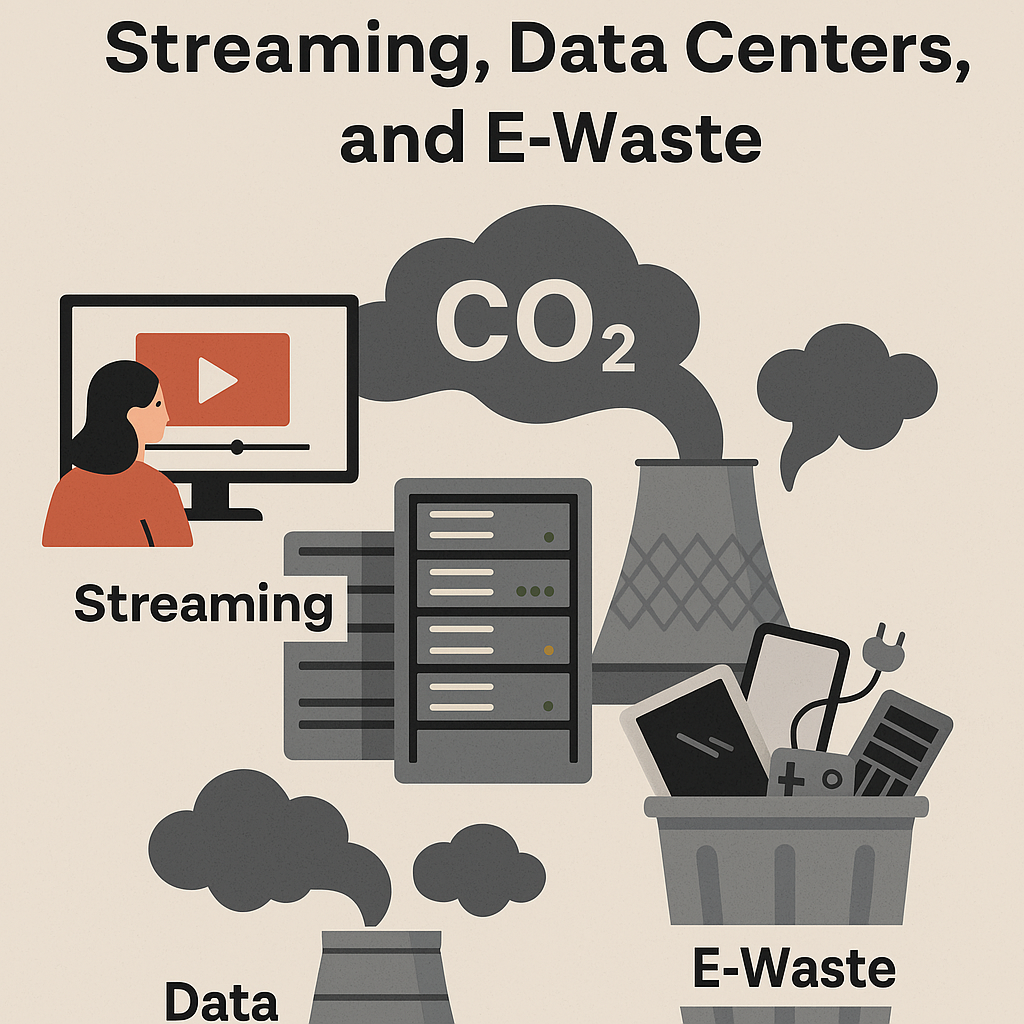
“The carbon footprint of the digital age is growing faster than most people realize. Every time we stream a movie, upload a photo, or store files in the cloud, we contribute to global carbon emissions. This happens because the energy needed to power data centers, support internet infrastructure, and manufacture electronic devices often comes from fossil fuels. Moreover, the increasing problem of e-waste adds to this footprint by releasing toxic materials into the environment. Understanding the carbon footprint of our digital habits is the first step toward creating a more sustainable future.”
Understanding the Carbon Footprint of the Digital Age
“I had no idea watching a few episodes on Netflix could contribute to climate change.”
That’s something I often hear—and honestly, you’re not alone. The reality is, our digital habits come with invisible environmental costs, and it’s time we start talking about them.
From binge-watching shows to upgrading to the latest iPhone, each of these actions leaves a carbon trail. So let me walk you through how our digital lifestyle is shaping the planet’s future.
First, let’s talk about data centers and Their Carbon Footprint
These are the massive, humming facilities that store and process everything we do online—emails, social media, streaming, cloud backups, and even this very blog post you’re reading.
What many don’t realize is this: data centers consume between 1% and 2% of global electricity, much of which is still generated by fossil fuels. According to IEA’s Data Centre Report, that number is likely to rise unless aggressive green transitions are made.
The need to cool servers 24/7 adds even more strain on energy use. As we move toward a more connected world, we must ask: is our digital growth sustainable?
Now let’s dive into streaming—because I know you’re watching
Whether it’s Netflix, YouTube, or TikTok, streaming video is one of the biggest data guzzlers out there. When you stream an hour of high-definition content, you’re contributing up to 400 grams of CO₂ emissions—especially if your power grid runs on coal or gas.
You can read more on this from the Carbon Trust’s study on digital emissions.
So, next time you’re watching a video in the background, ask yourself—do I really need this in HD?
Then, there’s the The Carbon Footprint of E-Waste and Electronic Devices
Raise your hand if you’ve ever upgraded your phone even though the old one still worked. I’m guilty too. But those old phones, laptops, and gadgets don’t just vanish—they pile up as e-waste.
Globally, we generate over 50 million tons of e-waste annually, much of which ends up in landfills. And here’s the dangerous part: these electronics contain toxic materials like lead and mercury, which can seep into our soil and water.
What’s worse? Most of these devices could’ve been reused or recycled. Organizations like Earth911 can help you find local electronics recycling drop-offs.
So, what can we do about it?
This isn’t just a tech company issue. You and I have a role to play. Here are a few things we can start doing right now:
- Lower your video resolution to standard definition when HD isn’t necessary
- Extend the life of your devices—buy used, repair instead of replacing
- Recycle responsibly—don’t toss electronics in the trash
- Support companies that power their data centers with renewable energy
Tech companies must also step up—by designing energy-efficient hardware, switching to green power, and taking responsibility for their product life cycles.
We can’t fight climate change without addressing the digital world
Yes, the digital revolution has brought amazing benefits. But it’s time we acknowledge that every click, scroll, and stream has a cost.
We don’t need to give up the internet—but we do need to make smarter choices.
Take Action Now
Ready to make a difference?
Start your journey toward digital sustainability and ecolonomic living by visiting EAT Community—a space where innovation meets action. Learn how to make a little money while making the planet better.
Let’s use technology to heal, not harm.
Related Articles and References:
- How Businesses Can Reduce Their Carbon Footprint
- International Energy Agency (IEA). (2022). Data Centres and Data Transmission Networks.
Available at: https://www.iea.org/reports/data-centres-and-data-transmission-networks - The Carbon Trust. (2020). What is the carbon footprint of video streaming?
Available at: https://www.carbontrust.com/news-and-insights/insights/what-is-the-carbon-footprint-of-video-streaming - United Nations University. (2020). Global E-waste Monitor 2020.
Available at: https://ewastemonitor.info/ - Earth911. (2024). Electronics Recycling Guide.
Available at: https://earth911.com/recycling-guide/how-to-recycle-electronics/ - Statista. (2023). Global electricity consumption of data centers from 2015 to 2022.
Available at: https://www.statista.com/statistics/1231230/global-data-center-electricity-use/ - Global E-Waste Statistics Partnership (GESP). (2020). The Growing E-Waste Problem.
Available at: https://globalewaste.org/ - Nature. (2020). Streaming has a bigger carbon footprint than you might think.
Available at: https://www.nature.com/articles/d41586-020-00543-5

The post The Carbon Footprint of the Digital Age: Streaming, Data Centers, and E-Waste first appeared on Institute of Ecolonomics.
Related Articles
